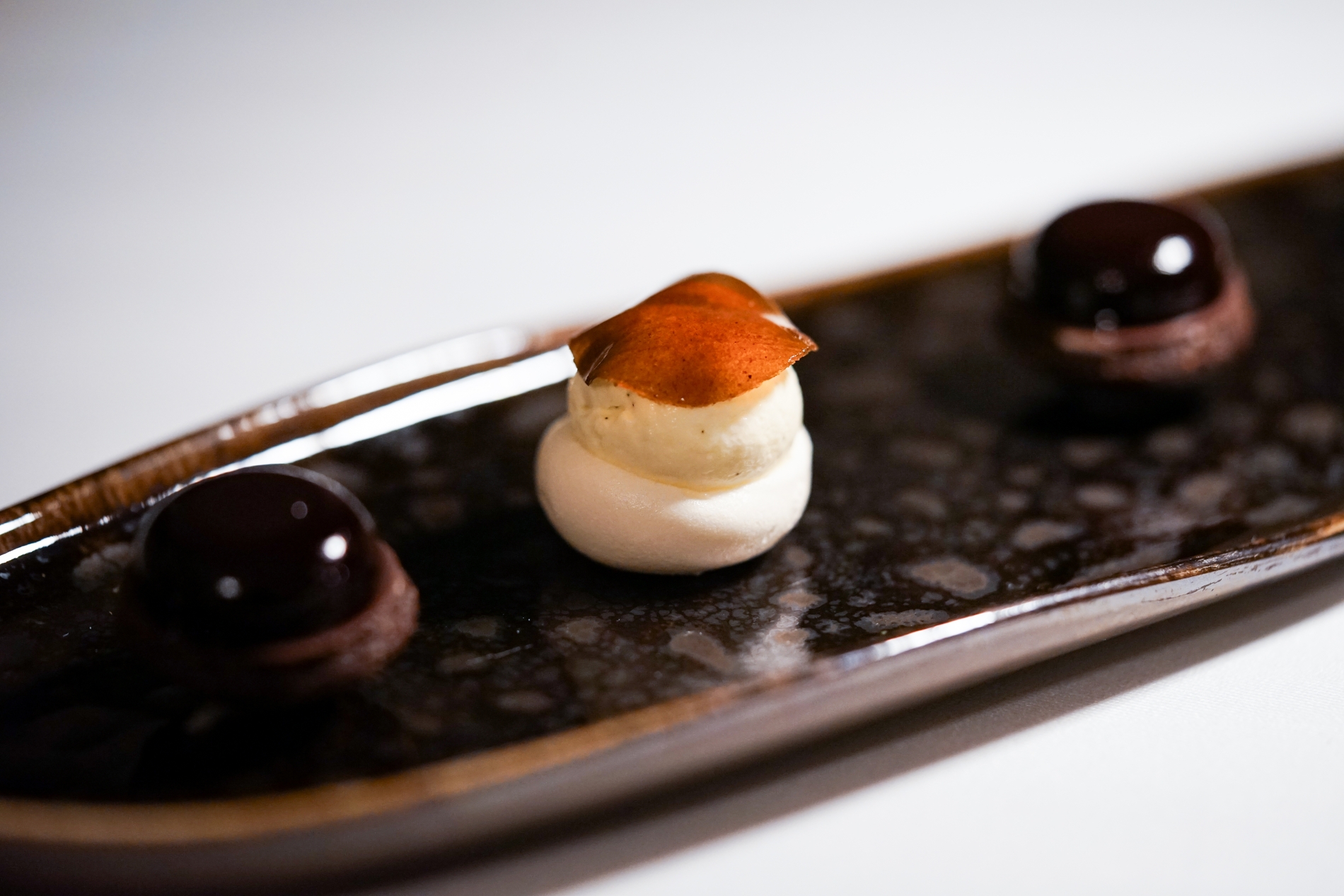

Where dessert becomes an exercise in precision.
At a Michelin-starred restaurant, dessert is rarely treated as something sweet added at the end of dinner. It is often planned with the same level of detail as every savory course that comes before it.
Pastry chefs work with temperature, texture, acidity, sweetness, shape, and timing to create desserts that can look remarkably simple while requiring hours, sometimes days, of preparation behind the scenes.
Precision Is Everything
Pastry has always demanded accuracy.
A few extra grams of an ingredient or a small change in temperature can affect the texture of a mousse, the rise of a soufflé, or the shine of a glaze.
In a Michelin-starred kitchen, that precision becomes even more important because every plate must be consistent. The dessert served to the first table of the evening should have the same texture, balance, and appearance as the one served hours later.
Desserts Are Built in Layers
Many fine-dining desserts contain far more elements than you initially notice.
A seemingly simple chocolate dessert might combine a delicate sponge, crisp wafer, smooth ganache, frozen element, sauce, and something slightly bitter or acidic to balance the sweetness.
Each component has a purpose. Some provide crunch, others create softness, while sauces and fresh ingredients can prevent richer elements from becoming overwhelming.
The challenge is making all those layers feel effortless together.
Sweetness Isn’t Always the Main Focus
One of the most interesting things about modern pastry is how frequently chefs move beyond traditional ideas of dessert.
Herbs, olive oil, vegetables, spices, cheese, tea, and savory ingredients can all appear on the dessert menu.
Fruit may be paired with something smoky. Chocolate might arrive with sea salt or fermented flavors. A familiar ingredient such as strawberries can be prepared several different ways on the same plate.
The goal isn’t simply to make something sweeter. It’s to create balance.
Seasonality Shapes the Menu
Just as savory chefs build menus around seasonal produce, pastry chefs often work with ingredients at their best.
Summer might bring berries, peaches, cherries, and fresh herbs. Autumn introduces apples, pears, nuts, and warmer spices. Citrus can brighten winter menus, while spring encourages lighter flavors.
Seasonality also means a restaurant’s signature dessert may change throughout the year rather than remaining exactly the same.
Presentation Has a Purpose
Michelin-starred desserts are often visually striking, but successful presentation goes beyond creating something attractive for photographs.
The position of each component can affect how the dessert is eaten. A sauce placed beneath a mousse creates a different bite from one poured around it. A crisp element may be positioned carefully so it stays crunchy until the guest reaches it.
Beautiful plating works best when it also improves the experience of eating the dish.
The Work Starts Long Before Service
The few minutes spent assembling dessert at the pass represent only the final stage.
Pastry teams may begin preparing components early in the day. Doughs need resting, ice creams need freezing, chocolates require tempering, fruits may need poaching, and delicate decorations must be made carefully.
During service, everything comes together quickly.
The Final Course Has a Big Responsibility
Dessert is often the last major impression a restaurant leaves with its guests.
That gives pastry chefs an unusual challenge. Their creation needs to feel exciting after several previous courses without becoming exhausting.
At its best, Michelin-level pastry achieves that balance beautifully. It combines technical discipline with creativity, transforming familiar ingredients into something unexpected while still delivering the simple pleasure that every great dessert should provide.