
Discover how sharing recipes, stories, and kitchen traditions brings families closer and creates memories that last a lifetime.
Food has always brought families together, but cooking together offers something even more meaningful. It creates opportunities to share stories, learn new skills, and strengthen relationships across generations.
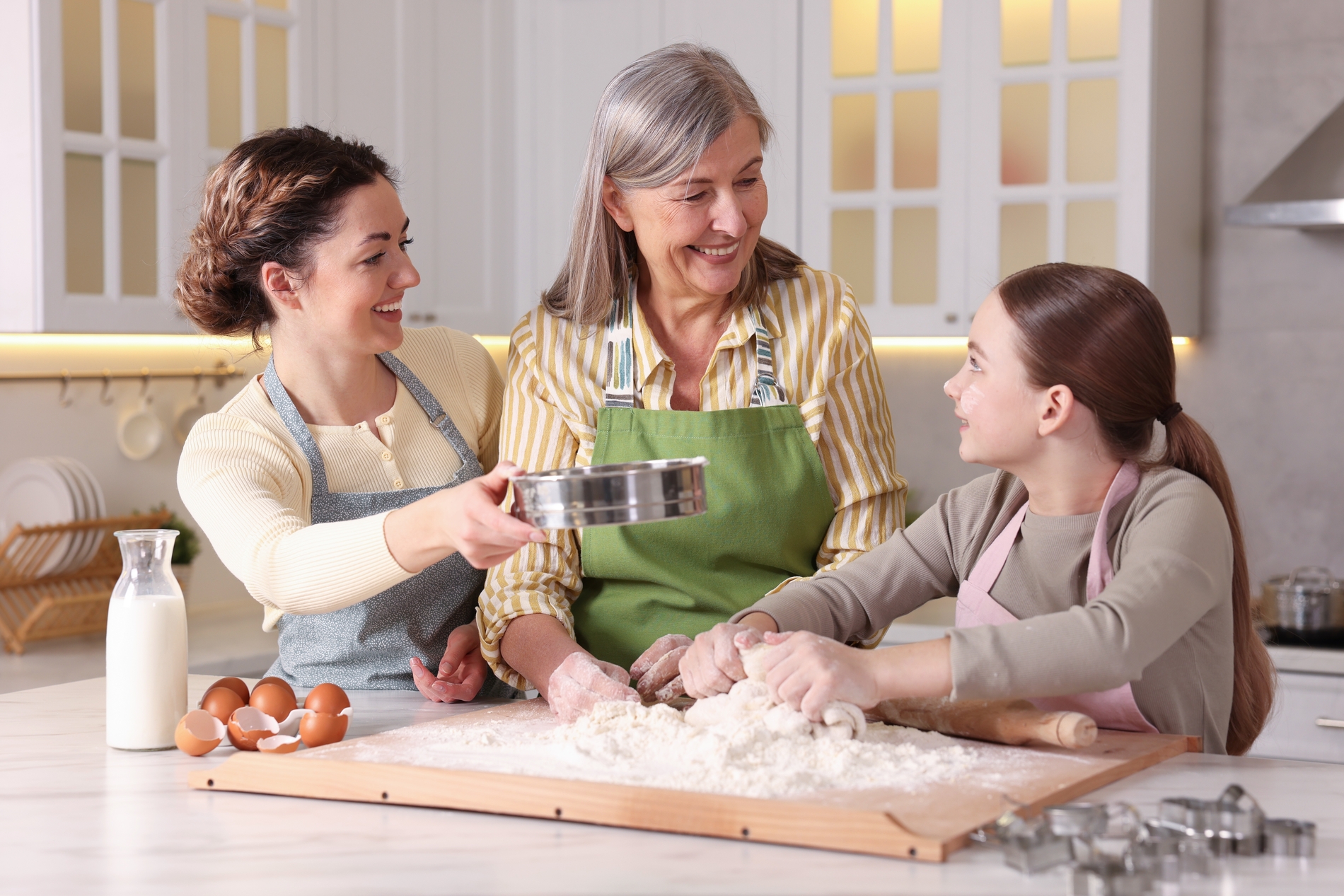
Whether it’s a grandmother teaching her grandchildren a traditional recipe or parents preparing dinner with their children, these simple moments can become treasured family memories.
Cooking together isn’t just about preparing meals. It’s about connection, patience, laughter, and passing down traditions that might otherwise disappear.
Keeping Family Recipes Alive
Every family has recipes that carry special meaning.
It might be a grandmother’s homemade bread, a traditional curry, or a dessert prepared during celebrations.
These dishes often hold memories of childhood, family gatherings, and special occasions.
When older family members teach younger generations how to prepare them, they’re sharing more than ingredients and instructions.
They’re preserving a part of their family’s history.
Writing these recipes in a family cookbook can help keep them alive for future generations.
Learning Through Shared Experiences
The kitchen provides a wonderful environment for learning.
Children can develop practical skills by measuring ingredients, mixing batter, washing vegetables, and helping with simple preparations.
Older family members can introduce traditional cooking techniques, while younger generations may bring fresh ideas and modern approaches.
These exchanges create opportunities for everyone to learn something new.
Cooking also encourages teamwork, communication, and problem-solving.
Even small tasks help children feel involved and give them a sense of accomplishment.
Sharing Stories Around the Kitchen Counter
Some of the most meaningful family conversations happen naturally while preparing food.
As ingredients are chopped and dishes simmer, family members often begin sharing stories.
Grandparents might remember meals from their childhood, while parents recall family celebrations or funny kitchen mistakes.
These conversations help younger generations understand their family’s experiences and traditions.
The relaxed atmosphere of the kitchen makes storytelling feel natural rather than planned.
Over time, these ordinary conversations become an important part of family life.
Bringing Different Generations Together
Cooking creates common ground between people of different ages.
Grandparents, parents, teenagers, and young children can all participate according to their abilities.
One person might prepare ingredients, another could handle the cooking, and someone else could arrange the table.
Working toward a shared meal encourages cooperation and appreciation.
It also gives family members opportunities to spend time together without relying on screens or other distractions.
More Than Just a Meal
Cooking across generations celebrates family, culture, and togetherness.
It allows older generations to share their knowledge while giving younger family members opportunities to contribute their own creativity.
Every shared recipe becomes a bridge between the past and present.
And sometimes, the simplest moments spent together in the kitchen become the most meaningful family traditions.