
Discover the elegance of Japanese omakase, where trust, craftsmanship, and seasonal ingredients create an unforgettable dining experience.
Japanese cuisine is celebrated around the world for its attention to detail, fresh ingredients, and beautiful presentation. Among its many dining traditions, omakase stands out as one of the most personal and memorable experiences.
Unlike ordering from a traditional restaurant menu, omakase invites diners to place their trust in the chef.
The word omakase roughly translates to “I’ll leave it up to you,” reflecting the idea that the chef chooses what to serve based on seasonal ingredients, expertise, and creativity.
What follows is more than an ordinary meal. It’s a carefully planned dining experience where every dish tells a story.
Understanding the Meaning of Omakase
Omakase is built around trust between the diner and the chef.
Instead of selecting individual dishes, guests allow the chef to create a sequence of courses.
The experience is especially associated with sushi restaurants, although omakase can also be found in other styles of Japanese dining.
Each course is chosen to complement the next, creating a balanced progression of flavors, textures, and temperatures.
The chef may adjust the meal depending on ingredient availability, seasonal specialties, and sometimes individual guest preferences.
This flexibility makes every omakase experience slightly different.
The Importance of Fresh, Seasonal Ingredients
Seasonality is one of the defining principles of Japanese cuisine.
Omakase chefs carefully select ingredients based on freshness, quality, and the time of year.
Spring menus may feature delicate seafood and lighter flavors, while autumn selections might highlight richer ingredients.
At sushi-focused restaurants, fish is chosen for its quality and suitability for different preparations.
Chefs consider factors such as texture, fat content, and how each ingredient pairs with seasoned rice.
The emphasis is not necessarily on using the most expensive ingredients.
Instead, the goal is to showcase each ingredient at its best.
Watching the Chef at Work
One of the most appealing aspects of omakase is the opportunity to observe the chef preparing each course.
Many restaurants feature intimate counters where guests sit directly in front of the preparation area.
From slicing fish to shaping sushi rice, every movement reflects years of practice.
The chef carefully controls the size, temperature, and seasoning of each piece.
Even small details, such as the amount of wasabi or the pressure used to shape rice, can influence the final result.
Watching these techniques adds another dimension to the meal and helps diners appreciate the craftsmanship involved.
A Carefully Designed Progression of Flavors
An omakase meal usually follows a thoughtful sequence rather than presenting dishes in a random order.
At a sushi restaurant, the experience may begin with lighter seafood before gradually introducing richer flavors.
Delicate white fish might be followed by tuna, shellfish, or other seasonal selections.
Some meals include small appetizers, cooked dishes, soup, or dessert.
The exact order varies depending on the chef and restaurant.
Temperature also plays an important role.
Sushi rice is often served slightly warm, creating a contrast with the seafood and enhancing the overall experience.
Each course contributes to the rhythm of the meal.
The Beauty of Minimalist Presentation
Japanese omakase dining places great importance on presentation.
Rather than relying on elaborate decorations, chefs often allow the natural beauty of the ingredients to stand out.
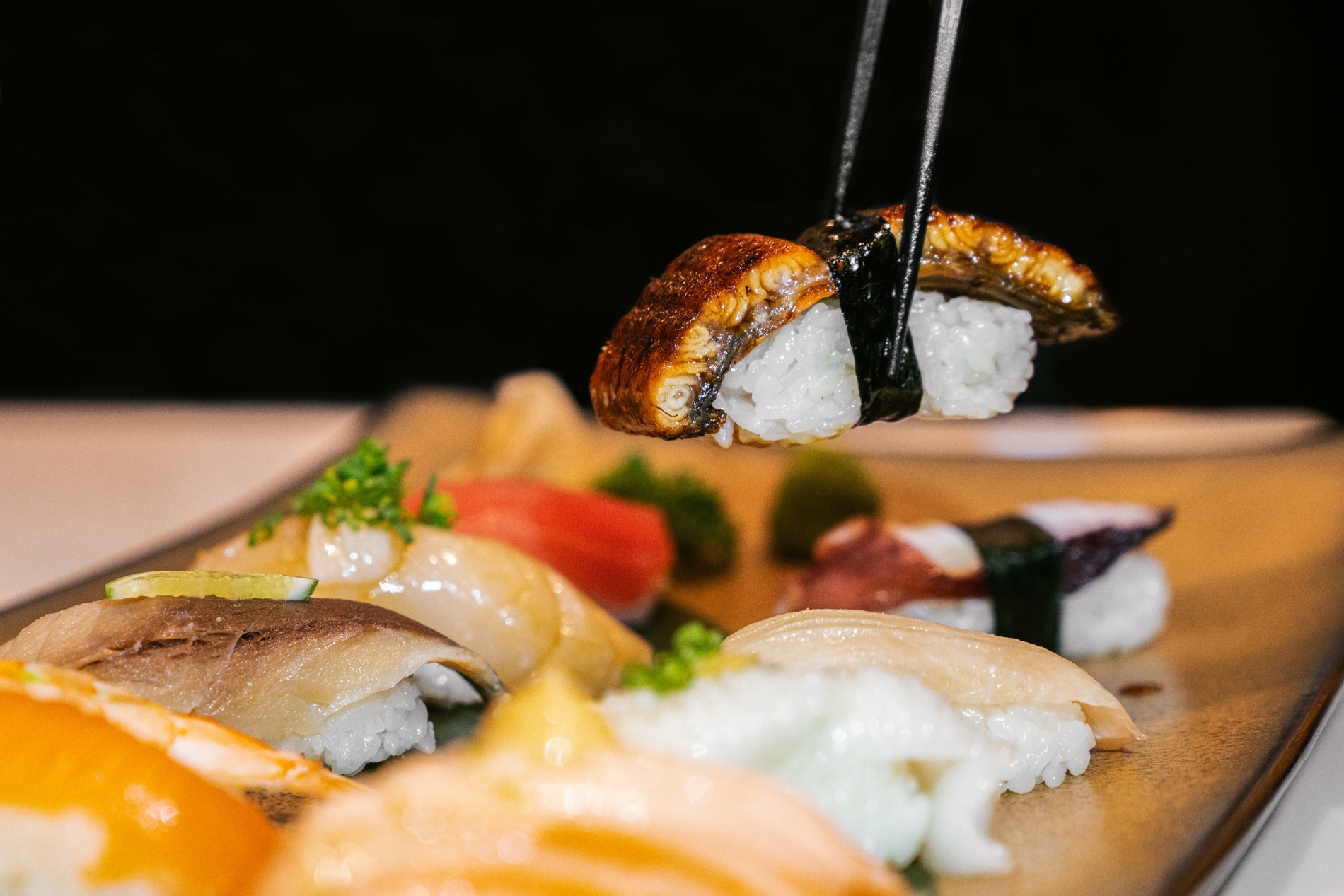
A single piece of sushi may be presented on a simple ceramic plate or served directly onto the guest’s dining surface.
The colors, textures, and arrangement are carefully considered.
Traditional Japanese tableware also contributes to the experience, with ceramics and serving dishes chosen to complement the food.
This understated approach creates a sense of elegance without distracting from the flavors.
Dining Etiquette and Respect for Tradition
Omakase dining often involves a few customs that help guests enjoy the experience.
Arriving on time is particularly important because many restaurants serve courses in a coordinated sequence.
Guests should also inform the restaurant about allergies or dietary restrictions before the meal begins.
When sushi is served, it is generally best enjoyed promptly so the intended temperature and texture are preserved.
Nigiri sushi may be eaten with either fingers or chopsticks, depending on personal preference and the restaurant’s style.
While asking thoughtful questions is usually welcome, diners should remain considerate of the chef’s concentration and other guests.
The atmosphere is often relaxed but respectful.
More Than Just a Meal
The art of Japanese omakase dining lies in its balance of simplicity, skill, and trust.
Every course reflects the chef’s understanding of ingredients, preparation techniques, and the changing seasons.
Rather than focusing on endless choices, diners are encouraged to enjoy the experience as it unfolds.
The result is a meal that feels thoughtful, personal, and deeply connected to Japanese culinary tradition.
For anyone who appreciates food as an art form, omakase offers a beautiful reminder that some of the most memorable dining experiences begin by allowing someone else to take the lead.