

Credit: Shutterstock
If you follow winter sports, you’ve probably noticed that they keep getting faster, tougher, and more adventurous. Enter skimo, short for ski mountaineering — a sport that’s finally stepping into the spotlight as it prepares to debut at the 2026 Winter Olympics in Italy.
For many people, this will be the first time they’ve ever heard of skimo. And that’s part of what makes it so exciting.
So, what exactly is skimo?
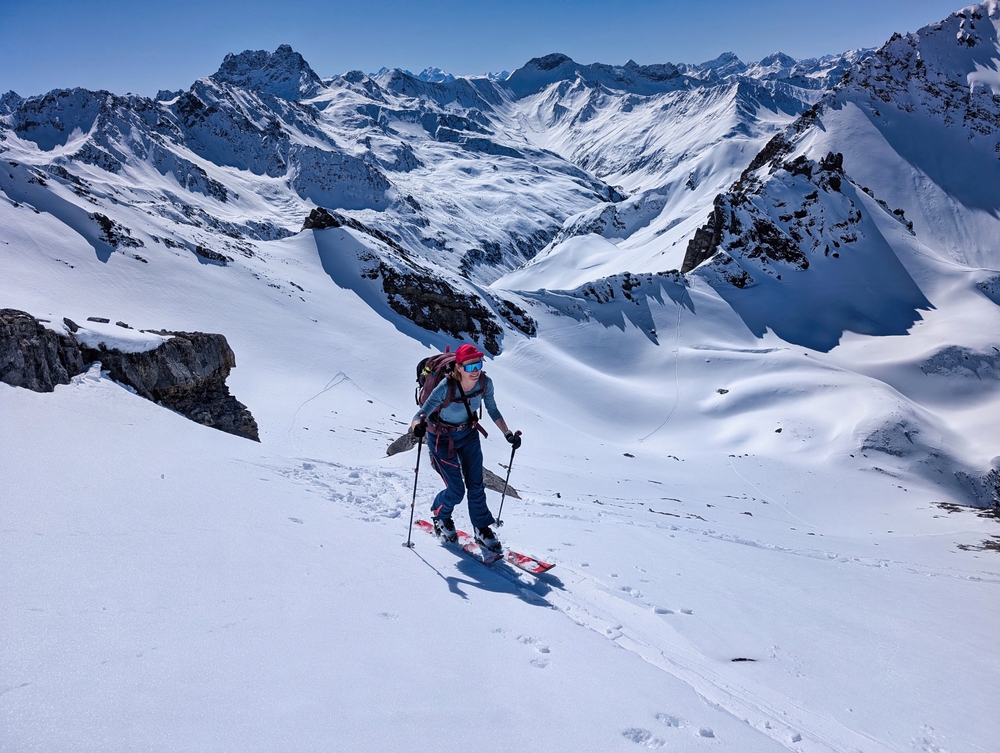
Skimo combines uphill endurance with downhill ski skill. Athletes climb snow-covered mountains on skis using removable climbing skins, then switch modes at the top and ski back down — all while racing the clock. There are no chairlifts, no shortcuts, and no room to coast. It’s pure human-powered movement in a high-alpine environment.
Think of it as a blend of cross-country skiing, alpine racing, and mountain endurance sports. It’s demanding, technical, and surprisingly elegant to watch.
From niche mountain sport to Olympic stage
While skimo has long been popular in parts of Europe and in mountain regions of North America, it’s remained largely outside the mainstream. That’s slowly changing, thanks to passionate athletes and guides who believed the sport deserved more attention.
One of those advocates is Di Gilbert, a mountain guide who helped build the competitive skimo scene from the ground up. Though she never considered herself an elite racer, her early experiences competing internationally showed her just how much potential the sport had — and how little exposure it received.
Instead of stepping away, she focused on creating opportunities for others to try skimo, race it, and build a community around it. Her efforts played a role in pushing the sport toward wider recognition and, eventually, Olympic inclusion.
Why skimo feels different
What sets skimo apart isn’t just the physical challenge — it’s the setting. Races take place in real mountain terrain, not stadiums or groomed resorts. Athletes battle steep climbs, rapid transitions, and technical descents, all while navigating unpredictable weather and snow conditions.
For many skimo athletes, the sport is as much about connection to nature as it is about competition. The mountains demand focus, respect, and teamwork, creating a strong sense of shared purpose among participants.
Can beginners try skimo?
Yes — with some preparation. Most people who get into skimo already know how to ski and have some experience with backcountry or touring setups. Across the US, ski touring groups, mountain clubs, and guided programs offer introductions to the sport.
Entry-level races are often short, looped courses designed to be welcoming and social rather than intimidating. They’re built to help newcomers learn the rhythm of climbing, transitioning, and descending — and to show that skimo is as much fun as it is challenging.
What the Olympic debut means
Skimo’s inclusion in the 2026 Winter Olympics is expected to introduce the sport to millions of viewers worldwide. For longtime enthusiasts, it’s a huge step forward — not as an endpoint, but as a doorway.
While Olympic courses will be shorter and more controlled, the heart of skimo still lives in long, high-mountain races that cross glaciers, ridgelines, and remote terrain. That adventurous spirit is what continues to draw people in.
As skimo prepares for its Olympic moment, one thing is clear: this is a sport built on movement, mountains, and the simple thrill of earning every turn. For anyone craving something new in winter sports, skimo might just be the next obsession.